


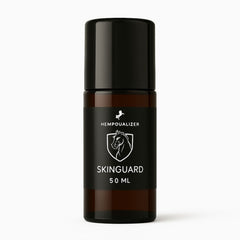

Your horse is not being “difficult”, it may have ulcers.
Does your horse pin its ears back when being saddled? Or maybe it has suddenly become “electric” under leg, or started yawning more often than usual? Although we often blame this on temperament, science is clear: these may be behavioral signs of pain.
Ulcers (EGUS) are a silent problem in modern stables. They affect sport horses, leisure horses, and even those that spend plenty of time out on pasture. Today, we are breaking this topic down into clear, practical pieces, without scientific jargon, but with real solutions.
Two sides of the equine stomach: where is the problem?
A horse’s stomach is not a uniform organ. Think of it as two very different worlds:
- Bottom (glandular region): this is the “tough one.” It produces mucus and bicarbonates that protect it from corrosive acid. Ulcers develop here when the protective barrier breaks down, most often because of chronic stress, lack of social contact, or medication.
- Top (non-glandular region): this is the “sensitive one.” It has no natural protection at all. Ulcers develop here when acid from the lower part “splashes” upward, for example during intense exercise on an empty stomach.
Important: standard medications such as omeprazole work very well for the upper part, but in the lower part their effectiveness is only 14–25%. That is why many horses never fully recover after standard treatment.
Less obvious symptoms: can you read the “language of pain”?
A horse will not tell you it is suffering, but it will show you through its behavior. Here are signs we often mistake for “bad mood”:
- Lack of rest (a horse that does not lie down): this is one of the most telling signs. The process of lying down and getting up requires tension in the abdominal muscles, which causes acid to wash over the sores in the stomach. To avoid that pain, the horse stops lying down. If your horse’s rug is always clean, its legs are dirty from standing, and it looks permanently tired, check its stomach.
- Sensitivity around the girth and during grooming: although “girthiness” does not affect every horse with ulcers, it is a common accompanying symptom. If your horse pins its ears or tries to bite when you tighten the girth, and you have ruled out back problems, this is almost certainly a sign of abdominal discomfort.
- Change in posture: standing with the legs spread wide apart (“sawhorse stance”) or often adopting a posture as if urinating are attempts to stretch the abdomen and find at least a moment of relief.
- Micro-gestures and stereotypies: frequent yawning, teeth grinding (bruxism), tail swishing while eating, suddenly stopping a meal, or biting at the flanks.
- Aggression and anxiety: sudden outbursts toward herd mates or handlers, especially around feeding time, are often the result of an acid surge triggered by excitement.
Why does my horse have ulcers? Causes people rarely talk about
Beyond a lack of forage and too much starch, science points to some surprising stressors:
- “Talk radio” in the stable: studies have shown that spoken broadcasts such as news or interviews are more stressful for horses than music. Constant human voices may be perceived as a signal of threat.
- Loneliness behind a solid wall: lack of physical contact with another horse is a major metabolic stressor for a herd animal.
- The “Acid Splash” phenomenon: during trot and canter, acid splashes around like coffee in a cup without a lid. If a horse is worked on an empty stomach, the acid freely damages the vulnerable upper part of the stomach. The solution? A handful of chopped alfalfa before riding creates a “mat” that helps keep the acid down.
- No constant access to water: water is the foundation for producing protective mucus. Interruptions in access increase the risk of ulcers by more than 2.5 times.
The omeprazole trap: why do ulcers come back? What is tapering?
Many people see symptoms return just three days after treatment ends. This is the so-called rebound effect. When the body is suddenly “allowed” to produce acid again, it floods the stomach with even greater force. Without proper healing and the elimination of stressors, ulcers return in nearly 90% of horses.
That is why gradual withdrawal, known as tapering, is now the standard recommended by leading equine gastroenterologists, including Dr. Ben Sykes, in order to minimize the risk of rebound acid hypersecretion (RAHS).
Why is tapering necessary?
When a horse is given omeprazole, its body detects the high pH in the stomach and interprets it as a system error. In response, it produces huge amounts of gastrin, a hormone that desperately tries to force the stomach to produce acid.
- Sudden withdrawal: imagine a dam suddenly bursting. Gastrin immediately activates all the unblocked proton pumps. The result is a powerful acid surge, sometimes even higher than before treatment.
- Gradual withdrawal: this is like slowly opening the floodgates. It gives the body time to gradually lower gastrin levels in the blood and slowly return to its natural pH balance.
The trap: why does tapering alone often fail?
Even with a perfect tapering protocol, ulcers can return for two reasons:
- Untreated glandular disease (EGGD): as we know, omeprazole has low effectiveness in the lower part of the stomach, only 14–25%. If the medication is withdrawn while lesions in the glandular part are still active, any amount of acid, even normal acid, will still cause pain.
- No changes in management: if a horse finishes treatment but still lives under stress, hears talk radio, has limited herd contact, or trains on an empty stomach, the physiological causes of ulcers are still there.
How does Hempqualizer change the game?
Our approach is not about temporarily “switching off” acid, but about supporting the body so it can protect itself.
Hempqualizer+: deep regeneration
Thanks to phytocannabinoids (CBD/CBG), we act on CB1 receptors in the digestive tract:
- We naturally reduce excess acid, without the risk of a sudden rebound after withdrawal.
- We support regeneration of the glandular region, which standard medications handle poorly.
- We calm stress at its source, helping the horse regain a sense of safety and... start lying down to rest again.
Hempqualizer Compete: a pre-performance shield (FEI Safe)
Give it before transport or training. It helps stabilize stomach pH, preventing damage caused by Acid Splash and reducing stress.
Your action plan (the golden list)
- Hay 24/7: never leave your horse without forage for longer than 4–6 hours.
- Chopped forage before riding: always create a barrier against acid before training.
- Provide calm and companionship: replace the radio with quiet and give your horse a friend.
- Regenerate, do not just suppress: choose smart Hempqualizer supplementation that supports healing rather than simply masking symptoms.
Ulcers are not a life sentence. They are a signal that your horse needs change. With Hempqualizer, a return to full health and enjoyment of work is absolutely possible.
Do you have questions about your horse? Write to us, we will gladly help you choose the right support.
Scientific bibliography
The list below includes key academic sources, publications in peer-reviewed veterinary journals, and expert materials that we consulted while creating this article.
Main publications
Sykes, B. W., et al. (2015).European College of Equine Internal Medicine Consensus Statement—Equine Gastric Ulcer Syndrome in Adult Horses. Journal of Veterinary Internal Medicine, 29(5), 1288-1299. (Fundamentalna praca definiująca podział na ESGD i EGGD).
Andrews, F. M., et al. (2005).Equine Gastric Ulcer Syndrome: Pathophysiology and Prevention. Equine Veterinary Education, 17(S1), 30-34.
Equine Gastric Ulcer Council (1999).Recommendations for the diagnosis and treatment of equine gastric ulcer syndrome (EGUS). Equine Veterinary Education, 11(5), 262-272.
Epidemiology and behavior
Luthersson, N., et al. (2009).Risk factors associated with equine gastric ulceration (EGUS) in 201 horses in Denmark. Equine Veterinary Journal, 41(7), 625-630.
Malmkvist, J., et al. (2012).Behavioural stress responses and gastric ulceration in horses. Applied Animal Behaviour Science, 139(3-4), 212-219. (Analiza sygnatur behawioralnych bólu).
Tamzali, Y., et al. (2011).Prevalence of gastric ulcer syndrome in high-level endurance horses. Equine Veterinary Journal, 43(2), 141-144.
Enviromental and mechanical causes (Acid Splash)
Lorenzo-Figueras, M., & Merritt, A. M. (2002).Effects of exercise on gastric volume and pH in the proximal portion of the horse stomach. American Journal of Veterinary Research, 63(11), 1481-1487. (Badanie mechanizmu "Acid Splash").
Freeman, D. E., et al. (1999).Effects of deprivation of food and water on gastric acidity and ulcer formation in horses. American Journal of Veterinary Research, 60(11), 1354-1358.
Kędzierski, W., et al. (2017).Psychological and physiological stress response in horses. Journal of Equine Veterinary Science. (Kontekst stresu akustycznego i izolacji).
Standard therapy and the rebound effect
Sykes, B. W., et al. (2014).The effects of dose and diet on the pharmacodynamics of omeprazole in the horse. Journal of Veterinary Internal Medicine, 28(6), 1724-1731.
Lester, G. D., et al. (2005).A dose-response study of oral omeprazole in the treatment of equine gastric ulcer syndrome. Journal of Veterinary Internal Medicine, 19(2), 241-246.
Sykes, B. W., et al. (2014).Comparison of three doses of omeprazole in the treatment of equine glandular gastric disease. Journal of Veterinary Internal Medicine, 28(2), 345. (Dowody na niską skuteczność omeprazolu w EGGD).
ECS and cannabinoids (CBD/CBG)
Gamble, L. J., et al. (2018).Pharmacokinetics, Safety, and Clinical Efficacy of Cannabidiol Treatment in Osteoarthritic Dogs. Frontiers in Veterinary Science, 5, 165. (Kluczowe dane o bezpieczeństwie kannabinoidów u zwierząt).
Di Marzo, V., & Izzo, A. A. (2006).Endocannabinoid control of glandular secretion, inflammation and pain in the GI tract. Trends in Pharmacological Sciences, 27(2), 73-77.
Coutts, A. A., & Izzo, A. A. (2004).The gastrointestinal pharmacology of cannabinoids: an update. Current Opinion in Investigative Drugs, 5(8), 827-830. (Mechanizm wpływu CB1 na sekrecję kwasu solnego).
Turner, S. E., et al. (2017).Molecular Targets of Cannabidiol in Neurological Disorders. Neurotherapeutics, 14(3), 677-698. (Kontekst stabilizacji psychicznej/lękowej).
Supplements and feed
Murray, M. J., & Grady, J. (2002).The effect of a pectin-lecithin complex on horses with gastric mucosal lesions. Veterinary Journal, 163(2), 171-174.
Reese, R. E., & Andrews, F. M. (2009).Nutrition and Dietary Management of Equine Gastric Ulcer Syndrome. Veterinary Clinics: Equine Practice, 25(1), 79-92.
Videla, R., & Andrews, F. M. (2009).New perspectives in equine gastric ulcer syndrome. Veterinary Clinics: Equine Practice, 25(2), 347-362.
Opracowano na podstawie baz danych PubMed, Google Scholar oraz materiałów konferencyjnych BEVA (British Equine Veterinary Association).