



Every rider and horse owner knows this scenario: an important competition is approaching, a difficult transport, New Year's Eve, or a farrier visit, and your horse starts anxiously pacing just thinking about it, turning into a ticking time bomb. In an act of desperation, you reach for a popular "calming paste" or pour an expensive magnesium and tryptophan supplement into the manger. The manufacturer promises instant relaxation and focus. But does it really work?
Scientists and veterinarians decided to put these preparations under the microscope. The results of rigorous studies verifying their effectiveness are ruthless for many manufacturers, and extremely enlightening for us, equestrians. It turns out that stuffing a horse with "calmers" often misses the point, and in some cases, can even be dangerous.
Here is what science says about the two most popular ingredients in equine calmatives: L-tryptophan and magnesium.
Myth 1: "The magic paste will work in two hours" (Or why ad hoc effects are a fiction)
On the labels of many calming pastes, you will find the recommendation: "Administer 2 hours before a stressful situation." Sounds great, right? Unfortunately, you cannot fool physiology.
Clinical studies unequivocally debunk the effectiveness of ad hoc (immediate) action for two reasons:
- Magnesium needs time: For magnesium to block stress receptors in the nervous system, it needs days or even weeks of regular supplementation to saturate the cells. Giving it in a paste just before a stressful event won't have time to work on a neurological level.
- Tryptophan and stress: With tryptophan, the matter is even more complicated. When a horse gets stressed (e.g., when you load it into a tight trailer), its body is flooded with cortisol (the stress hormone). Cortisol literally "steals" the tryptophan provided in the paste and, instead of turning it into the happiness hormone (serotonin), throws it onto a different metabolic track. As a result, compounds are created that can... amplify fear!
L-Tryptophan: A Huge Misunderstanding and Real Danger
In human medicine, the biochemistry of L-tryptophan is simple and well documented. It is an amino acid that, in the human brain, is converted into serotonin, the neurotransmitter responsible for relaxation and well-being, and melatonin, the sleep hormone. In humans, as well as in some animals, such as pigs or dogs on specialized diets, administering tryptophan can indeed reduce anxiety and promote calmness.
Several decades ago, manufacturers of horse supplements looked at this mechanism and assumed: “Since mammalian biochemistry is broadly similar, if we give tryptophan to a 500-kilogram herbivore, we will get a relaxed horse.”
This was a huge mistake, and we have known it since 1994. In the following years and subsequent studies, these conclusions have been consistently confirmed.
Why doesn't Tryptophan calm horses?
At the beginning, no one took into account that a horse is not a “large human.” Key biological differences were ignored:
- Flight instinct: As a prey animal, the horse has a completely different hormonal response to stress. The cortisol release in horses is so powerful that it immediately blocks serotonin production pathways.
- Amino acid competition: The equine diet is completely different. Tryptophan given to a horse almost always loses at the blood-brain barrier to other amino acids.
- Digestive system: Humans do not have such a huge fermentation vat, the large intestine, where unabsorbed tryptophan can be converted into toxic skatole and indole.
Moreover, rigorous tests involving horses showed that the addition of tryptophan has absolutely no effect on the horse's reaction speed when startled. The fight-or-flight mechanism remains intact.
However, other studies brought a real shock. It was proven that low doses of tryptophan (the kind found in popular supplements) do not calm the horse at all, but rather cause mild excitation and make their heart rate return to normal much slower after a stressful event!
Deadly danger in the hindgut (doses over 350 mg per 1 kg of body mass)
A horse is a herbivore with a powerful fermentation "factory" in its cecum and large intestine. And this is where the drama begins. When we give a horse a large dose of tryptophan in a supplement, the body cannot absorb it in time, and the leftovers end up in the hindgut. There, bacteria jump on the tryptophan and convert it into toxic compounds: indole and skatole.
Skatole damages equine lungs, leading to inflammation, and indole destroys red blood cells. Studies at Tufts University proved that administering large doses of tryptophan to ponies caused acute hemolytic anemia and kidney failure.
Conclusion: L-tryptophan as an isolated "calming" supplement for horses is a waste of money, and in larger doses, playing with the animal's life.
Magnesium: The Real Hero... but only under certain conditions
Unlike tryptophan, magnesium has a solid scientific foundation. It acts as a physiological "plug" or fuse in the nervous system (blocking the so-called NMDA receptors). When magnesium is lacking, nerves are exposed, the horse becomes electric, spooky, tense, and its muscles may tremble.
Studies show that appropriate magnesium supplementation can drastically reduce a horse's panic flight speed, and even reduce the symptoms of Headshaking by 64% in horses with trigeminal neuralgia!
Where is the catch? Magnesium works ONLY WHEN the horse is deficient.
Suggesting that magnesium will calm any horse, even a healthy one, is a biological lie. If your horse has full magnesium reserves in its body, giving it an expensive supplement will only result in... peeing it out onto the most expensive bedding in the stable. Excess magnesium in a healthy individual is simply filtered out by the kidneys immediately.
When does your horse actually need magnesium?
There are situations in which diet and modern husbandry "flush out" this precious element from the horse. Consider supplementation if your mount:
- Sweats intensely: Along with sweat, sport horses lose massive amounts of magnesium.
- Eats a lot of alfalfa (lucerne): Alfalfa is full of calcium. Calcium and magnesium are eternal rivals. When there is too much calcium in the diet, it pushes magnesium out of the body, creating an electric, nervous horse.
- Goes out on young, spring grass: Fertilized grass is full of potassium, which blocks magnesium absorption in the intestines.
- Is being treated for ulcers (EGUS): Medications like omeprazole reduce stomach acidity, which drastically hinders the absorption of minerals, including magnesium.
The Magnesium Paradox: When you overdo it
Be careful not to overdo it! Stuffing magnesium supplements into a healthy, well-nourished horse "just in case" can trigger the so-called Magnesium Paradox. An excess of this element in sensitive horses can slow down the transmission of visual signals to the brain by fractions of a second. As a result, the horse sees stimuli with a delay (like a lagging video) and suddenly explodes in panic because the world around it seems to "jump". The rider perceives this as an "attack of fury," while in reality, overzealous supplementation is to blame.
Which form of magnesium to choose?
If we establish that the horse has a deficiency (preferably through a thorough diet analysis; blood tests are not always reliable because the body maintains blood levels at the expense of bones), we must choose the right preparation:
- Magnesium Oxide (inorganic): Highly underrated! It is cheap, you only need to scoop a tiny bit (it is very "dense" in elemental magnesium), and it perfectly buffers stomach acids.
- Magnesium Citrate or Aspartate (organic): They absorb slightly better at the intestinal level, but you need to feed them in handfuls (huge volume) to deliver the right dose of pure magnesium.
- What to avoid: Magnesium sulfate. It absorbs the worst and acts as a strong laxative.
A Completely Different Alternative: CBD, CBG and Lemon Balm (The Hempqualizer Phenomenon)
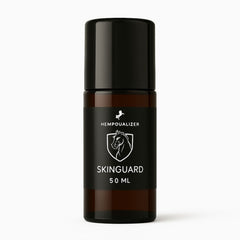
Since we already know that L-tryptophan is a dead end and magnesium only works for deficiencies, the question arises: how then to support a horse under stress? The answer, which has been taking the equestrian market by storm in recent years (and has real physiological backing), is phytocannabinoids and potent herbal extracts. A great example of this trend are products from the Hempqualizer line. They work completely differently than classic "calmers", they do not try to trick serotonin levels, but instead influence the endocannabinoid system and soothe the nervous system through natural phyto-ingredients.
There are two standout products in this series on the market, but it is very important not to put them in the same bag, especially if you compete.
Hempqualizer+ (The "Plus" version) - Powerful chronic support, but beware of doping!
Hempqualizer+ is a preparation based on broad-spectrum hemp oil (very high concentration of CBD and CBG, but without psychoactive THC) combined with lemon balm extract. It works in two ways:
- Calms the mind: Reduces separation anxiety, hyperactivity, and spookiness.
- Repairs the body: And this is its greatest strength. CBD and CBG have proven strong anti-inflammatory and analgesic effects. It works perfectly for horses with gastric ulcers, asthma (RAO), Headshaking syndrome, as well as horses rehabilitating from injuries or suffering from joint pain (bone spavin, kissing spines). The "+" version is twice as strong as the standard one, making it ideal for long-term therapy of more serious ailments.
CATCH FOR ATHLETES: CBD and CBG are on the FEI (Fédération Équestre Internationale) list of prohibited substances. Hempqualizer+ is doping! If you use it, you must strictly stop administering the preparation 10 to 14 days before a competition.
Hempqualizer Compete – A clear head on the course (Doping-free)
So what to give a sport horse that panics just at the sight of a conspicuous judge's tent? Hempqualizer Compete was created with competitions in mind.
To meet the strict FEI requirements,the entire strength of this preparation is based on a highly concentrated CO₂ extract from organic lemon balm, dissolved in an MCT oil carrier.
- Spot-on action: Unlike magnesium pastes, this product actually works ad hoc. Noticeable effects appear just 30–60 minutes after administration into the mouth.
- No "zombie" effect: Lemon balm calms and improves concentration (the horse starts thinking instead of fleeing), but does not cause dullness or lethargy, so you don't lose the energy needed to tackle a jumping course or dressage arena.
- 100% legal: You can safely give it before loading into a trailer, a farrier visit, and most importantly, moments before entering the show ring, without fearing an anti-doping control. Additionally, lemon balm acts as a protective shield for the stomachs of horses with ulcers.
Summary: Golden Rules for Horse Owners
- Give up on empty promises: Tryptophan pastes given an hour before stress have more to do with magic than science. Your own relaxation will work better than a syringe.
- Avoid isolated Tryptophan: It does not bring a calming effect to horses, can cause excitation, and in large doses is toxic.
- Magnesium is not a panacea for training gaps: It will help reduce spookiness and tension only in horses that have a real deficiency of it (sweat, alfalfa, ulcers, spring grass).
- Reach for proven plant-based alternatives: If you are looking for ad hoc support for competitions (without doping risk), aim for Hempqualizer Compete. If your horse requires general support, has ulcers, or inflammation, Hempqualizer+ will be a great choice, as long as you remember the anti-doping rules.
- Find the cause, don't mask the symptom: If a horse is "electric", analyze its forage with an equine nutritionist, check tack fit, and look for hidden pain before spending hundreds of dollars on trendy supplements. Your horse probably lacks a proper dietary balance, not a miracle powder.
Scientific sources and bibliography (for the inquisitive)
This article is based on peer-reviewed research in the fields of veterinary medicine, ethology, and biochemistry. If you want to deepen your knowledge on specific theses from the text, here are the key publications:
On the toxicity of L-Tryptophan in horses (anemia, skatole, organ damage):
Paradis, M. R., et al. (1991). Experimental induction of hemolytic anemia and Heinz body formation by oral administration of L-tryptophan in ponies. American Journal of Veterinary Research. (A fundamental study from Tufts University showing hemolytic indole toxicity—red blood cell breakdown—in ponies).
Carlson, J. R., & Breeze, R. G. (1984). Ruminal metabolism of plant toxins with emphasis on indolic compounds. Journal of Animal Science. (Explains the mechanics of the production of toxic skatole by intestinal bacteria from orally administered tryptophan, which destroys the respiratory system).
On the lack of a calming effect of Tryptophan (excitation effect and no effect on fear):
Noble, G. K., et al. (2016). Effects of a commercial dose of L-tryptophan on the reaction of horses to a startle test. Applied Animal Behaviour Science. (Confirms that commercial tryptophan pastes do not change a horse's flight speed in a startle test at all).
Bagshaw, C. S., et al. (1994). Behavioral and physiological effect of orally administered tryptophan on horses subjected to acute isolation stress. Applied Animal Behaviour Science. (A study proving the so-called excitatory response—horses' heart rates returned to normal much slower after stress following tryptophan administration).
On the effective action and the "Magnesium Paradox":
Sheldon, S. A., et al. (2019). Intravenous and enteral administration of magnesium sulfate and its effect on horses with trigeminal-mediated headshaking. Journal of Veterinary Internal Medicine. (UC Davis studies on the impact of magnesium on stabilizing hyperactivity and trigeminal nerve pain—a 64% reduction in symptoms).
Dodd, J. A. (2017). An investigation into the efficacy of magnesium as an equine calmative. (PhD Thesis, Charles Sturt University). (Detailed research on the actual reduction of horses' flight speed with correct magnesium aspartate supply in deficient horses).
Kellon, E. (2014). Equine Nutritional Needs. (A study on, among other things, the phenomenon of the Magnesium Paradox: excess magnesium causing disturbances in the transmission of visual signals to the brain and panic attacks "for no reason").